Welcome to Hell Lock is the second title in Alawar Entertainment's Vampire Saga; And in a word I would call it rather bland.
First and foremost it is the story that makes the game bland. And every single character, especially the protagonist is devoid of personality; The games plot is uninteresting, never explained, and unbelievable. More then anything the actions, personality, dialogue, and looks of the protagonist reminds me of Ken, as in Barbi and Ken. He is just so dopey, and does not really seem to have any personally to speak-of; I can only assume that this game is aimed as young girls as I cannot see anyone else even potentially enjoying playing as him. The rest of the game follows pretty similarly. The vampire(s) in the game do not really make an appearance nor is any of their actions ever explained. If anything their main goal in life seems to be to simply make the city slightly spooky, like they were planing to turn the city into haunted house style attraction and they were practising for this role.
The game is also extremely linear, far more then it has to be. You often have multiple puzzles on the go, but that does not mean you can solve them whenever you want, for the vast majority you will have to complete a bunch of unrelated puzzles before you are allowed to find/pick up the needed object or try to solve the logic puzzle. But despite this linearness you are constantly backtracking to solve old puzzles and find new items; At random points in the game old previously used HOG locations will suddenly and inexplicably become active, with absolutely no in-game indication that they have done so. Which basically degrades the entire game into, solve a puzzle, check the "map" (picture album) for the new puzzle location, warp there and solve, repeat. And one rather strange thing is that the game does not even change the scene one iota when reusing a HOG location and many items you will be finding several times. So by the end of your game, even if you have a moderately bad memory, all HOG puzzles will consist of a significant fraction of objects that you remember the location of.
The rest of the game is pretty much what you would expect. the graphics are OK; The sound effects and music are OK; The gameplay is very repetitive but other then that about what you would expect from a casual HOG title. So all in all, it is a sub-par game but, while I am no expert, is it probably still an average, to above average, HOG title.
My mini-review of Vampire Saga: Welcome to Hell Lock.
Showing posts with label hidden Object. Show all posts
Tuesday, August 16, 2011
Monday, May 9, 2011
The Tiny Bang Story
The Tiny Bang Story is a hidden object game that takes the genre to a never before seen peak; It shows that hidden object games do not simply appeal to a casual audience and that searching for hidden objects does not have to mean a disconnect from realistic puzzles that fit well within the plot. In The Tiny Bang Story you play on a small world that has recently been devastated by a meteor strike and shattered into many puzzle pieces. You travel the unaffected lands collecting these pieces and restoring your world.
The graphics of Tiny Bang are what should draw most players to the game because they are simply fantastic. These visuals are 2D and are quite fantastical in nature with slight hints of steampunk and come across as very alive which is only helped by the fantastic sound track.
The gameplay is equally well polished and I believe is some of the best the genre has to offer and by far the best I have ever played. Every single puzzle and hidden object you are directed to find makes sense in the plot even when considering the number of objects that you are asked to find. And in addition to the hidden objects you will also be solving many logic puzzles, which are quite well done and I found them quite fun is somewhat ambiguous.
My mini-review of The Tiny Bang Story.
Technical:
Getting it to Run (on a Windows 7 x64):
Runs perfectly fine with default settings.
Windowed Mode:
Fully supported.
Alt+Tab:
Supported, no side effects.
Friday, March 18, 2011
The Fall Trilogy: Chapter 1 – Separation
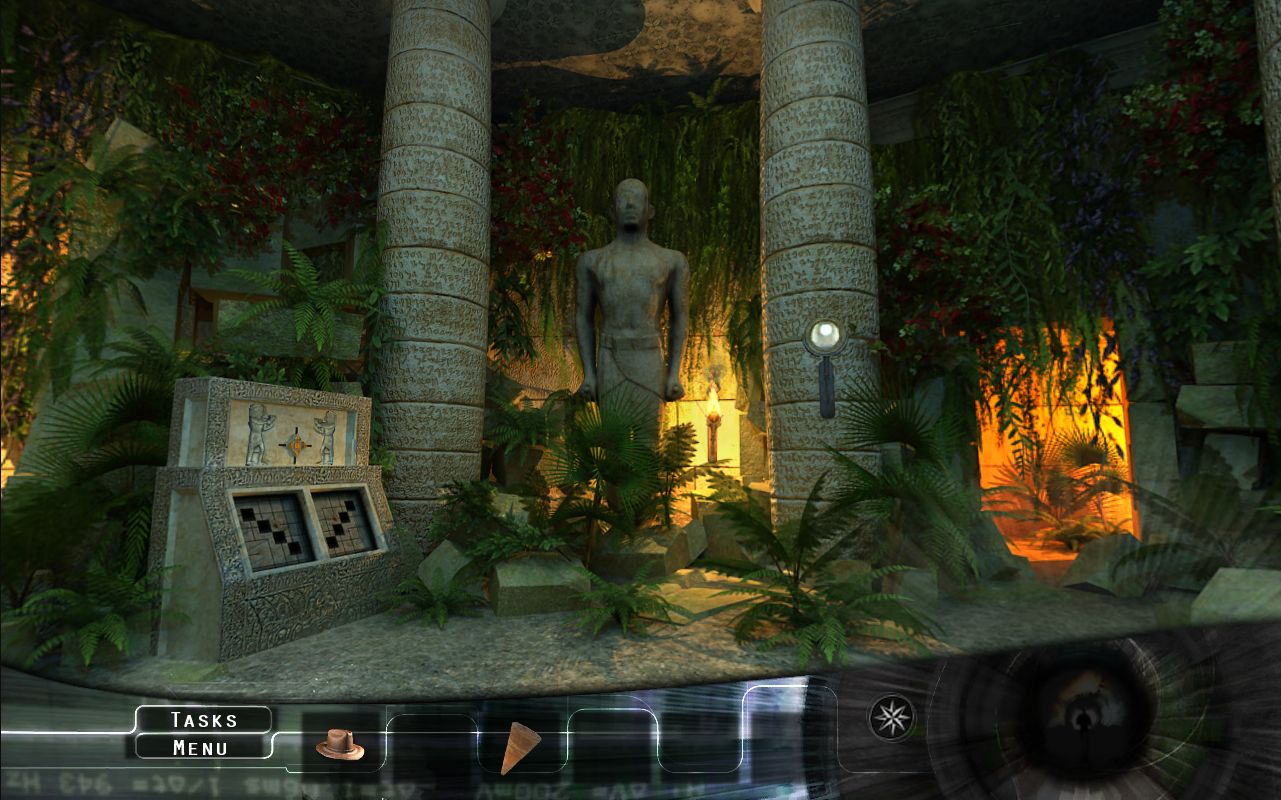
The first chapter of The Fall Trilogy, Separation, mixes the genres of puzzle, hidden object, and adventure. It is a release of Kheops Studios and is primarily a puzzle game, with some hidden object puzzles mixed in, and a small amount of story and inventory puzzles making up the adventure portion. It is a easy game, and even when a user gets stuck there are many options available to them to help solve the current problem. As such, it is great game for any newcomers to the adventure or puzzle genres; But still potentially holds a lot of entertainment for even the most hardcore fans of either.
One notable feature of Separation is the amount of hand-holding the game does; As the game takes the practice of giving hints to an extreme I have never before seen; Not that this is necessary a bad thing, as in general they are only offered and not pushed onto the player.
Some aspects of this hand-holding are build right into the gameplay, mainly the map system and the in-game commentary. The map system can be helpful as first it acts as a map, telling you where you have been and where you are, and secondly it notes what puzzles you have solved and which ones you have not. This mapping system even goes outside of the map screen into the game area; Where the game will note the name of the rooms you hover your mouse over if you have already been there, or a statement about not having explored that location, if you have not yet been there. All of this serves to make sure the user is never lost and always knows where he has to go. Like most adventure games, Separation has a few lines of dialogue whenever the user uses an item or clicks an interactive area on the screen. In Separation this commentary is often used to give subtle tips to the user when the incorrect solution is tried. These tips of course are given without the user asking for them, but they are subtle enough that they did not bother me.
The other aspects of the hand-holding are more conventional. One of these is built into the objectives menu; At any time the user can ask for a tip for any specified objective, but after the tip is used a short time is needed for the tip system to recharged before it can be used again. This same technique is mirrored in the hint system for the hidden object puzzles. And Instead of the hint system, normal puzzles simply have a skip function that charges in the same fashion. In addition to skipping the puzzles, stuck users have a few other options. One of them is the instruction system, that allows users to, at anytime, look-up how the current puzzle works. Puzzles are never explained, meaning this could be a useful feature; Except that all the puzzles are quite conventional and most players will have encountered all of them in one form or another many times before. And if this is not enough, the player can even reduce the difficulty of any puzzle he encounters, by simply resetting the puzzle and choosing the easy difficulty.
The story is rather vague in this first chapter. The story starts with the main character falling into some pit. He wakes up inside of an abandoned Asian ruin, with no memory of where his is or even who he is. He must then work his way out of the ruin solving puzzles at the many devices blocking his path. Along the way he occasionally has flashbacks of his prior life as he slowly regains his memory.
The puzzles of Separation are a mixture of hidden object and logic. They are mostly easy, even without using the hint systems, and very conventional; Solid, but without any of them really rising above the others as being particularly interesting. But one nice feature of the game is that the user will almost always have multiple puzzles to pick from at any time, giving the user some choice in his direction, even if the game is ultimately linear.
Probably the most refined feature of the game is the presentation. The environment is interesting and detailed; Containing many small animations that really bring it to life. Additionally, the interface is nice looking and very functional. One of the most notable aspects of the game is the soundtrack. The soundtrack is very upbeat and relaxing and also just very enjoyable music to listen to. And In addition, the sound effects and voice overs are very well done and only add to the experience. One notable option in the game is “360 Degree Free View”; This option enables or disables the free viewing of the rooms. When disabled all the rooms are separated into screens, when enabled the user is able to look around freely. There is no reason for this option to ever be turned off in my opinion, and it would significantly take away from the experience if it was.
Overall the game is enjoyable, but it is also somewhat bland. The Asian ruins are beautiful, but also dull and lifeless. It never really looks like a place that could exist, and as such does not draw you into the experience. The puzzles are also very conventional, every single one of them has been done before by other adventure games and done better.
Positives:
The plethora of good interesting puzzles.
Natives:
The lack of any real unique puzzles.
Summery:
A solid puzzle game, but it could benefit with a few unique puzzles.
Rating:
7/10
System Requirements:
OS: Windows XP, Vista
CPU: 800 MHz
RAM: 1280 MB
DirectX: 9.0
Hard Drive: 137 MB
One notable feature of Separation is the amount of hand-holding the game does; As the game takes the practice of giving hints to an extreme I have never before seen; Not that this is necessary a bad thing, as in general they are only offered and not pushed onto the player.
![]() |
| The map system for Separation |
Some aspects of this hand-holding are build right into the gameplay, mainly the map system and the in-game commentary. The map system can be helpful as first it acts as a map, telling you where you have been and where you are, and secondly it notes what puzzles you have solved and which ones you have not. This mapping system even goes outside of the map screen into the game area; Where the game will note the name of the rooms you hover your mouse over if you have already been there, or a statement about not having explored that location, if you have not yet been there. All of this serves to make sure the user is never lost and always knows where he has to go. Like most adventure games, Separation has a few lines of dialogue whenever the user uses an item or clicks an interactive area on the screen. In Separation this commentary is often used to give subtle tips to the user when the incorrect solution is tried. These tips of course are given without the user asking for them, but they are subtle enough that they did not bother me.
The other aspects of the hand-holding are more conventional. One of these is built into the objectives menu; At any time the user can ask for a tip for any specified objective, but after the tip is used a short time is needed for the tip system to recharged before it can be used again. This same technique is mirrored in the hint system for the hidden object puzzles. And Instead of the hint system, normal puzzles simply have a skip function that charges in the same fashion. In addition to skipping the puzzles, stuck users have a few other options. One of them is the instruction system, that allows users to, at anytime, look-up how the current puzzle works. Puzzles are never explained, meaning this could be a useful feature; Except that all the puzzles are quite conventional and most players will have encountered all of them in one form or another many times before. And if this is not enough, the player can even reduce the difficulty of any puzzle he encounters, by simply resetting the puzzle and choosing the easy difficulty.
The story is rather vague in this first chapter. The story starts with the main character falling into some pit. He wakes up inside of an abandoned Asian ruin, with no memory of where his is or even who he is. He must then work his way out of the ruin solving puzzles at the many devices blocking his path. Along the way he occasionally has flashbacks of his prior life as he slowly regains his memory.
The puzzles of Separation are a mixture of hidden object and logic. They are mostly easy, even without using the hint systems, and very conventional; Solid, but without any of them really rising above the others as being particularly interesting. But one nice feature of the game is that the user will almost always have multiple puzzles to pick from at any time, giving the user some choice in his direction, even if the game is ultimately linear.
Probably the most refined feature of the game is the presentation. The environment is interesting and detailed; Containing many small animations that really bring it to life. Additionally, the interface is nice looking and very functional. One of the most notable aspects of the game is the soundtrack. The soundtrack is very upbeat and relaxing and also just very enjoyable music to listen to. And In addition, the sound effects and voice overs are very well done and only add to the experience. One notable option in the game is “360 Degree Free View”; This option enables or disables the free viewing of the rooms. When disabled all the rooms are separated into screens, when enabled the user is able to look around freely. There is no reason for this option to ever be turned off in my opinion, and it would significantly take away from the experience if it was.
Overall the game is enjoyable, but it is also somewhat bland. The Asian ruins are beautiful, but also dull and lifeless. It never really looks like a place that could exist, and as such does not draw you into the experience. The puzzles are also very conventional, every single one of them has been done before by other adventure games and done better.
Positives:
The plethora of good interesting puzzles.
Natives:
The lack of any real unique puzzles.
Summery:
A solid puzzle game, but it could benefit with a few unique puzzles.
Rating:
7/10
System Requirements:
OS: Windows XP, Vista
CPU: 800 MHz
RAM: 1280 MB
DirectX: 9.0
Hard Drive: 137 MB
Monday, November 22, 2010
The Fall Trilogy: Chapter 2 Reconstruction
The Fall Trilogy is an amalgam of two genres, point and click adventure and hidden object; It was developed by Kheops Studios and the first two chapters have been released earlier this year. The first game had the unnamed protagonist, apparently suffering from amnesia, fall into a strange jungle temple and have to work his way out by solving puzzles and finding objects. But just as he discovered the exit he, for no apparent reason, started falling again through what appeared to be a high-rise laundry or garbage shoot. Now in the second chapter, Reconstruction, you wake up in the basement of a office building. A phone starts to ring and a mysterious man talks to you, calling you John and tells you to make your way to the 13th floor and search for a USB drive. The conversation seems to imply you are some type of spy or secret agent. With no other direction in your life you decide to follow the mans directions and head to the 13th floor search of the USB drive, a task that will take up the rest of this chapter.
Probably the most lacking part of the entire game is the story. For the most part, in both games, you are dropped into an environment, told little or nothing, and periodically given glimpses of your family as you start to remember your past. In both games you never really see anyone, but in the second chapter you do get instructions once from a mysterious voice and have to avoid security guards in at least one occasion. This lack of plot is really compounded by the bland lifeless environments in both games; These environments really seem like they could never really exist and only exist to hold the next random puzzle that is blocking your path, if you can call following the only available route simply for something to do, a path.
Taking a broad overview on the series looking for clues to what might be going on I first contemplate the name of the series, The Fall Trilogy. After playing the first two chapters I have come to the conclusion that Fall might simply refer to the character falling all the time, which is not a really interesting conclusion. The first game seemed to have a lot of allusions to Indiana Jones, and kind of portrayed the protagonist as an adventuring archaeologist, while the second, disjointedly, seemed to say that the protagonist was a secret agent or spy; The only incite I can gleam from this is that the protagonist must be completely insane and hallucinating or possibly in a coma and simply imagining all of this.
But the game is not nearly all bad, it has many redeeming qualities, and comes off at least as a somewhat average game. It has moderately enjoyable puzzles, and unlike the first game some challenging ones. Additionally, you cannot really get stuck as there are layers upon layers of hints, tips, and help, all intelligently incorporated into the game.
Positives:
Some interesting and even mildly challenging puzzles.
Negatives:
The new location is even more bland then the first game's.
Summery:
A solid game that does not really standout, if you where a fan of the first game then it is mostly more of the same and you will probably enjoy this game, but if like me you were getting bored of the game even before the first chapter finished then there is nothing in this game likely to reawaken your interest.
Rating:
3/5
Developer:
Kheops Studio
Publisher:
Kheops Studio
Release Date:
September 29, 2010
System Requirements:
http://www.the-fall-trilogy.com/chapter2-reconstruction
Probably the most lacking part of the entire game is the story. For the most part, in both games, you are dropped into an environment, told little or nothing, and periodically given glimpses of your family as you start to remember your past. In both games you never really see anyone, but in the second chapter you do get instructions once from a mysterious voice and have to avoid security guards in at least one occasion. This lack of plot is really compounded by the bland lifeless environments in both games; These environments really seem like they could never really exist and only exist to hold the next random puzzle that is blocking your path, if you can call following the only available route simply for something to do, a path.
Taking a broad overview on the series looking for clues to what might be going on I first contemplate the name of the series, The Fall Trilogy. After playing the first two chapters I have come to the conclusion that Fall might simply refer to the character falling all the time, which is not a really interesting conclusion. The first game seemed to have a lot of allusions to Indiana Jones, and kind of portrayed the protagonist as an adventuring archaeologist, while the second, disjointedly, seemed to say that the protagonist was a secret agent or spy; The only incite I can gleam from this is that the protagonist must be completely insane and hallucinating or possibly in a coma and simply imagining all of this.
But the game is not nearly all bad, it has many redeeming qualities, and comes off at least as a somewhat average game. It has moderately enjoyable puzzles, and unlike the first game some challenging ones. Additionally, you cannot really get stuck as there are layers upon layers of hints, tips, and help, all intelligently incorporated into the game.
Positives:
Some interesting and even mildly challenging puzzles.
Negatives:
The new location is even more bland then the first game's.
Summery:
A solid game that does not really standout, if you where a fan of the first game then it is mostly more of the same and you will probably enjoy this game, but if like me you were getting bored of the game even before the first chapter finished then there is nothing in this game likely to reawaken your interest.
Rating:
3/5
Developer:
Kheops Studio
Publisher:
Kheops Studio
Release Date:
September 29, 2010
System Requirements:
- OS: Windows XP or newer
- CPU: 800 Mhz
- RAM: 1 GB
- Video: 64 MB, DirectX 9.0c
- Hard Drive: 133 MB
http://www.the-fall-trilogy.com/chapter2-reconstruction
Subscribe to:
Posts (Atom)